Interview Internal Communication 1
Corporate Communications
Employee Experience
사내 커뮤니케이션을 통한 직원 행동 촉진 - '사내 커뮤니케이션 관리'의 저자 시미즈 교수 인터뷰(1부)
Jan 3, 2019
최근 기업의 글로벌화, M&A, 일하는 방식 개혁의 관점에서 사내 커뮤니케이션(※1)이 주목받고 있습니다. 많은 기업이 해외, 지역 및 국내 직원들이 회사의 경영 철학과 목표를 이해하고 수용하도록 하는 방법에 대해 고민하고 있을 것입니다. 이번 인터뷰에서는 2019년 2월에 '내부 커뮤니케이션 관리'라는 책을 편집하고 저술한 시미즈 시게미치 쓰쿠바학원대학교 객원교수를 초대하여 현재 사내 커뮤니케이션이 주목받는 이유와 그 중요성에 대해 들어보겠습니다.
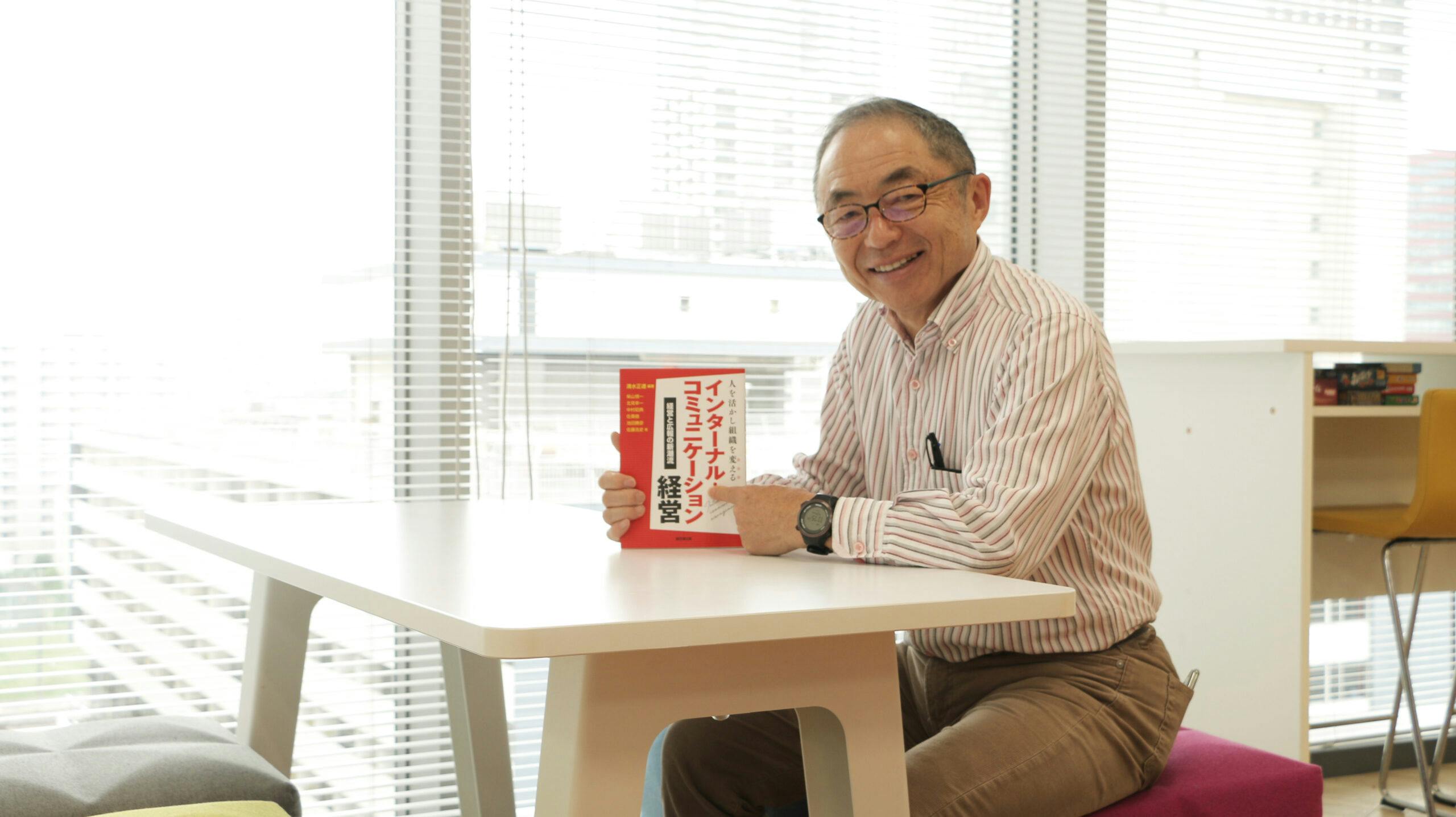
최근 기업의 글로벌화, M&A, 일하는 방식 개혁의 관점에서 사내 커뮤니케이션이 주목받고 있습니다. 많은 기업이 경영 철학과 목표를 어떻게 해외 및 지방 지사 직원과 재택 근무 직원에게 이해하고 전파할 수 있을지에 대한 고민에 직면해 있을 것입니다. 이번 인터뷰에서는 2019년 2월 '사내 커뮤니케이션 경영'이라는 책을 공동 집필한 시미즈 마사미치 쓰쿠바학원대학교 객원교수를 초대하여 현재 사내 커뮤니케이션이 주목받는 이유와 사내 커뮤니케이션의 중요성에 대해 2부로 나누어 이야기해 보겠습니다. 대상은 약 10,000명의 영업사원이었는데, 막상 문을 열어보니 사보를 읽지 않고 있는 것을 발견했습니다.
Brightcove (BC) OhnoBrightcove (BC) Ohno Thank you for taking the time to come to our office today. We have also been receiving an increasing number of inquiries about using video for the purpose of internal communication, and I read your book “Internal Communication Management” with great interest. Before we talk about the content, could you briefly tell us about your career and the motivation behind publishing this book? Professor Shimizu I had originally hoped to work for a newspaper company, but my wish was not granted, and in 1973 I joined Fukoku Mutual Life Insurance Company as a new graduate. At first I worked in the Personnel Department, but after a year and a half I was transferred to the Public Relations Department. There I was in charge of internal public relations. BC Ohno You’ve been in charge of internal public relations since 1974! I’m surprised. Professor Shimizu It was just by chance, but soon after joining the company I proposed to the head of the personnel department that we produce a recruitment guide book for students. I was put in charge of the project, and I think the fact that the guide book I put together with the editorial team of new employees was well received within the company led to my being selected for the internal communications department.Professor Shimizu I had originally hoped to work for a newspaper company, but my wish was not granted, and in 1973 I joined Fukoku Mutual Life Insurance Company as a new graduate. At first I worked in the Personnel Department, but after a year and a half I was transferred to the Public Relations Department. There I was in charge of internal public relations. BC Ohno You’ve been in charge of internal public relations since 1974! I’m surprised. Professor Shimizu It was just by chance, but soon after joining the company I proposed to the head of the personnel department that we produce a recruitment guide book for students. I was put in charge of the project, and I think the fact that the guide book I put together with the editorial team of new employees was well received within the company led to my being selected for the internal communications department.
이직 후 사내 사보 제작을 맡게 되었는데, 당시 타깃 독자는 1만 명의 생명보험 영업직 여성이었어요. 그런데 막상 사보를 열어보니 잘 읽히지 않는 것을 발견했습니다. 영업소에 가보니 잡지가 쓰레기통에 버려져 있더군요(웃음). 사보의 근본적인 개혁이 필요하다는 생각이 들어 매주 여성 주간지를 읽고 사보에 실린 기사를 검토했습니다. 생명보험 영업 여성들의 삶과 업무를 르포 형식으로 정리한 기사에 집중했죠. 반응이 매우 좋았고 당시 사장님도 관심을 보이셨죠. 이것이 제가 사내 커뮤니케이션에 관여하기 시작한 계기가 되었습니다. 1977년에는 일본경영자협회로 자리를 옮겨 비즈니스 잡지의 편집자 겸 기자로 일했습니다. 1989년에는 홍보실장을 거쳐 총무부장이 되어 총 13년 동안 홍보 업무를 담당했습니다.
After that, I worked as an environmental management consultant and then taught courses on environmental management and public relations at a university. BC Ohno In 1993, you published a book called “Corporate Culture and Public Relations” with Nikkei Publishing, but could you tell us how that came about? Professor Shimizu When I was working at the Japan Management Association, I took part in writing a series of five books on public relations to commemorate the 15th anniversary of the establishment of the Japan Institute for Social and Economic Affairs. At the time, there were new trends in internal communications, and we interviewed 80 companies and published the book under the title “Corporate Culture and Public Relations”. BC Ohno Of course, the term “internal communication” didn’t exist at that time, did it? Professor Shimizu At the time, it was called “internal public relations”, but because the content was a little narrow, we used the term “corporate culture” to include management principles and visions, and wrote a book about successful cases of internal public relations. After that, we published a book on administrative reform in the US called “Administrative Reform”, which was highly acclaimed by everyone.BC Ohno In 1993, you published a book called “Corporate Culture and Public Relations” with Nikkei Publishing, but could you tell us how that came about? Professor Shimizu When I was working at the Japan Management Association, I took part in writing a series of five books on public relations to commemorate the 15th anniversary of the establishment of the Japan Institute for Social and Economic Affairs. At the time, there were new trends in internal communications, and we interviewed 80 companies and published the book under the title “Corporate Culture and Public Relations”. BC Ohno Of course, the term “internal communication” didn’t exist at that time, did it? Professor Shimizu At the time, it was called “internal public relations”, but because the content was a little narrow, we used the term “corporate culture” to include management principles and visions, and wrote a book about successful cases of internal public relations. After that, we published a book on administrative reform in the US called “Administrative Reform”, which was highly acclaimed by everyone.
In 2002, we also published a book called “Corporate Communication Strategy”, and since then we have continued to publish a book every year, including co-authored works. The idea of implementing external communication based on internal communication. BC Ohno** Actually, within our company, we use the term “corporate communication” rather than “internal communication”. This is because it is now necessary to share awareness and goals not only with employees, but also with partners, franchisees and suppliers. Professor Shimizu That’s right. In “Corporate Communication Strategy”, we positioned all communication carried out by a company as corporate communication. In “Internal Communication Management”, we focused on inside-out-style public relations. This is a way of thinking that aims to improve external reputation based on the results of initiatives within the company. In the book, we feature Itochu Corporation as one example of a successful case.Professor Shimizu That’s right. In “Corporate Communication Strategy”, we positioned all communication carried out by a company as corporate communication. In “Internal Communication Management”, we focused on inside-out-style public relations. This is a way of thinking that aims to improve external reputation based on the results of initiatives within the company. In the book, we feature Itochu Corporation as one example of a successful case.
오카후지는 일반적으로 이해하기 어려운 무역회사 업무의 위상을 높이기 위해 2013년부터 일하는 방식 개혁에 앞장섰습니다. 특히 아침 출근제, 건강 관리, 노 정장 데이 등의 제도를 도입한 후 직원들의 생활과 업무가 어떻게 변화했는지를 실제 영상을 통해 보여주는 TV 광고를 방영했습니다.
또한 회사는 인트라넷의 "최고 경영진" 섹션을 통해 무역 회사의 업무를 직원들에게 전달합니다. 일본에서는 '총리의 동선'도 신문이나 '총리 공식 홈페이지'를 통해 공개하고 있지 않습니까? 이 회사에서도 오카후지 사장이 누구를 만나고 무슨 말을 했는지 등 모든 동선을 회사에 공개하고 있습니다. 이를 통해 자칫 이해하기 어려운 무역회사의 업무 이미지를 직원들의 행동과 생활을 통해 표현하고 있습니다. 또한 영상이기 때문에 감정의 움직임도 표현하고 있습니다. 저는 이를 '인사이드 아웃' 경영이라고 부릅니다.
The reason for publishing “Internal Communication Management” BC Ohno I see, so you are using the initiatives you have taken within the company externally as well. This is a good example of how corporate communication leads to corporate branding. I think there are some similarities with the Toyota Times, which is currently making headlines. So, could you tell us why you decided to publish “Internal Communication Management” again? Professor Shimizu I had always been interested in internal communication, but the direct trigger was when I heard a manager say at a reception at a general meeting in 2013, when I was appointed as the chair of the Japan Public Relations Society, that they were putting a lot of effort into internal communication.BC Ohno I see, so you are using the initiatives you have taken within the company externally as well. This is a good example of how corporate communication leads to corporate branding. I think there are some similarities with the Toyota Times, which is currently making headlines. So, could you tell us why you decided to publish “Internal Communication Management” again? Professor Shimizu I had always been interested in internal communication, but the direct trigger was when I heard a manager say at a reception at a general meeting in 2013, when I was appointed as the chair of the Japan Public Relations Society, that they were putting a lot of effort into internal communication.
당시 일본 기업들은 해외 및 국내 기업과의 M&A와 사업 재편이 활발하게 이루어지고 있었습니다. 하지만 합병 후 몇 년이 지났는데도 내부 시스템이 통합되지 않았고, 회의 등에서 두 회사가 합의하는 데 문제가 많다는 얘기를 들었습니다. 정보 시스템이나 인사 시스템의 통합과 검토뿐만 아니라 내부 홍보 대책에도 문제가 있을 수 있다고 생각해서 스터디 그룹을 조직하고 일본 홍보 학회 23개 회원사를 대상으로 현황과 과제에 대한 인터뷰를 실시했습니다. 그 결과 글로벌화에 따른 언어 및 보안 문제, 사내 웹사이트 및 소셜 네트워크 서비스 활용 등의 과제에 대해 기업마다 다른 답변을 하는 등 다양한 결과가 나왔습니다.
The issues faced by each company were diverse, and the discussions within the research group also went in many different directions, but in the end we decided to narrow down the theme to “management philosophy” and carry out research activities. When it comes to internal company PR, the PR department is usually in charge, but in order to get the management philosophy across to employees and encourage them to take action, the PR department alone cannot do it. It is necessary to conduct interviews with the management planning department, the human resources department, and the management team. So, with the cooperation of seven major companies, we conducted interviews to find out how corporate philosophy is communicated and shared with employees. ****The president himself devotes more time than other executives to interacting with employees BC Ohno As a result of the interviews, were there any patterns of success in companies where corporate philosophy is well-established? Professor Shimizu Yes. Companies where the top management actively engages in dialogue with employees tended to have a strong sense of corporate philosophy among their employees.BC Ohno As a result of the interviews, were there any patterns of success in companies where corporate philosophy is well-established? Professor Shimizu Yes. Companies where the top management actively engages in dialogue with employees tended to have a strong sense of corporate philosophy among their employees.
최고 경영진은 직원들과 대화할 기회를 만들기 위해 다른 경영진보다 더 많은 시간을 할애하고 있습니다. 또한 경영 이념을 '개인화'하기 위해서는 직원들이 주체적으로 행동할 수 있는 기회를 제공하고, 발표 기회를 마련하고, 우수한 이니셔티브에 대해 포상하는 것이 매우 효과적이라는 것을 알게 되었습니다. 경영 이념을 공유하는 것만으로는 충분하지 않으며 모든 직원이 동일한 이념에 따라 행동하는 것이 필요합니다.
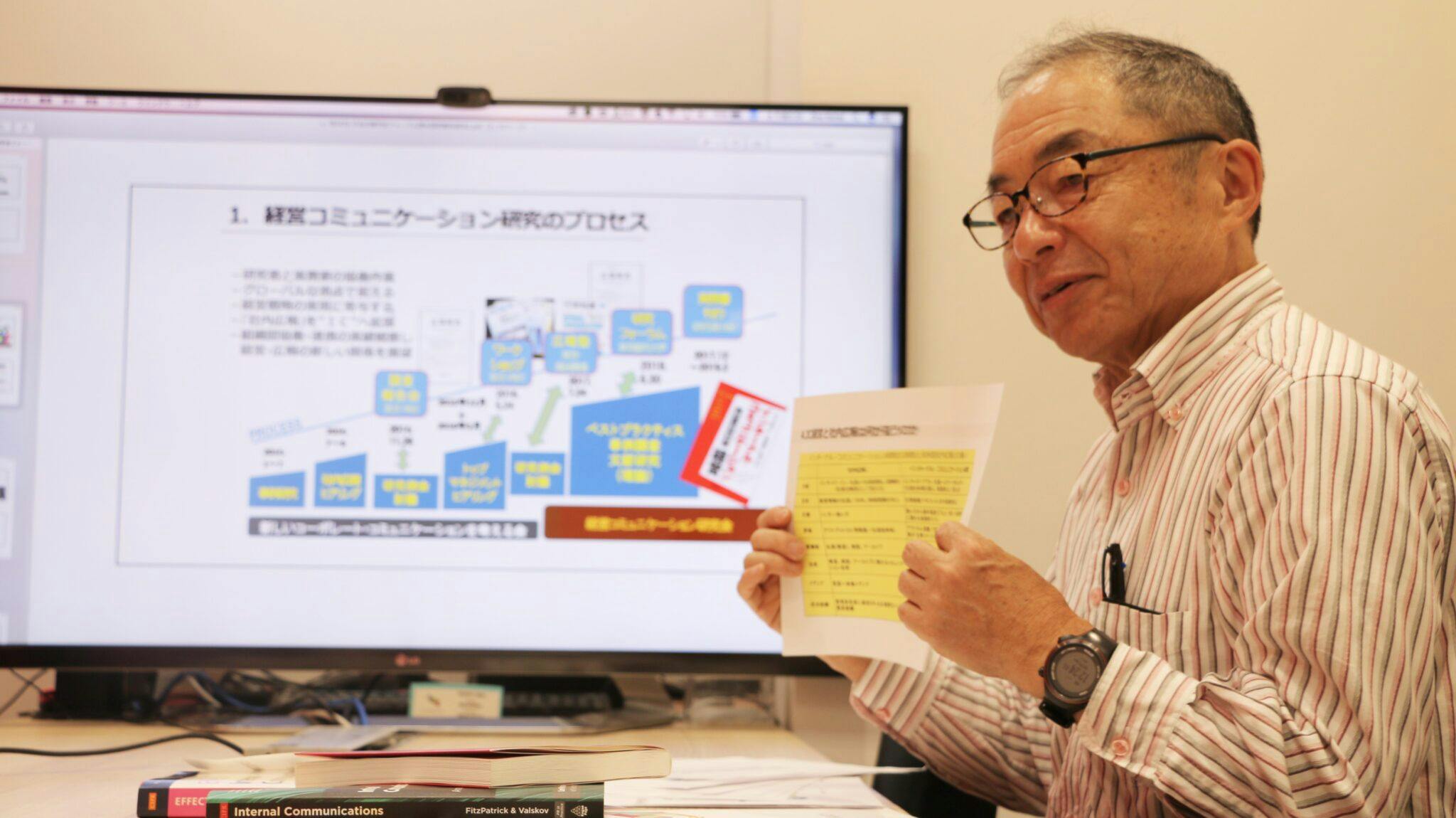
BC OhnoBC Ohno I see. It’s no use just sharing the corporate philosophy with employees if they don’t put it into practice. Is this the difference between internal PR and internal communication? Professor Shimizu That’s right. It is important to create a new corporate culture. To do this, it is necessary to get the cooperation of not only the public relations department, but also the human resources and training departments. It is also important for the management planning and CSR departments to encourage employees to act in line with the strategy.Professor Shimizu That’s right. It is important to create a new corporate culture. To do this, it is necessary to get the cooperation of not only the public relations department, but also the human resources and training departments. It is also important for the management planning and CSR departments to encourage employees to act in line with the strategy.
회사의 최고 경영진은 기업 이념을 직원들이 이해하도록 하는 것의 중요성을 이해하고, 각 부서장의 지원을 받아 홍보, 인사 및 교육 부서 등 관련 부서가 협력하여 직원들의 행동을 지원해야 합니다. 이것으로 인터뷰 1부를 마치겠습니다. 1974년부터 사내 커뮤니케이션에 종사하며 사내 커뮤니케이션의 발전 과정을 연구하고 분석해 온 시미즈 교수는 할 말이 많았습니다. 다음 편에서는 사내 커뮤니케이션의 핵심인 경영 철학을 이해하고, 이를 자신의 것으로 만들어 실천하는 것에 대해 이야기해 보겠습니다. *1 '내부 커뮤니케이션'은 일본어-영어 용어이므로 이 글에서는 '내부 커뮤니케이션'을 사용했습니다.