Interview Internal Communication 1
Corporate Communications
Employee Experience
社内コミュニケーションで社員の行動を促進する-『社内コミュニケーション・マネジメント』著者・清水教授インタビュー(前編)
Jan 3, 2019
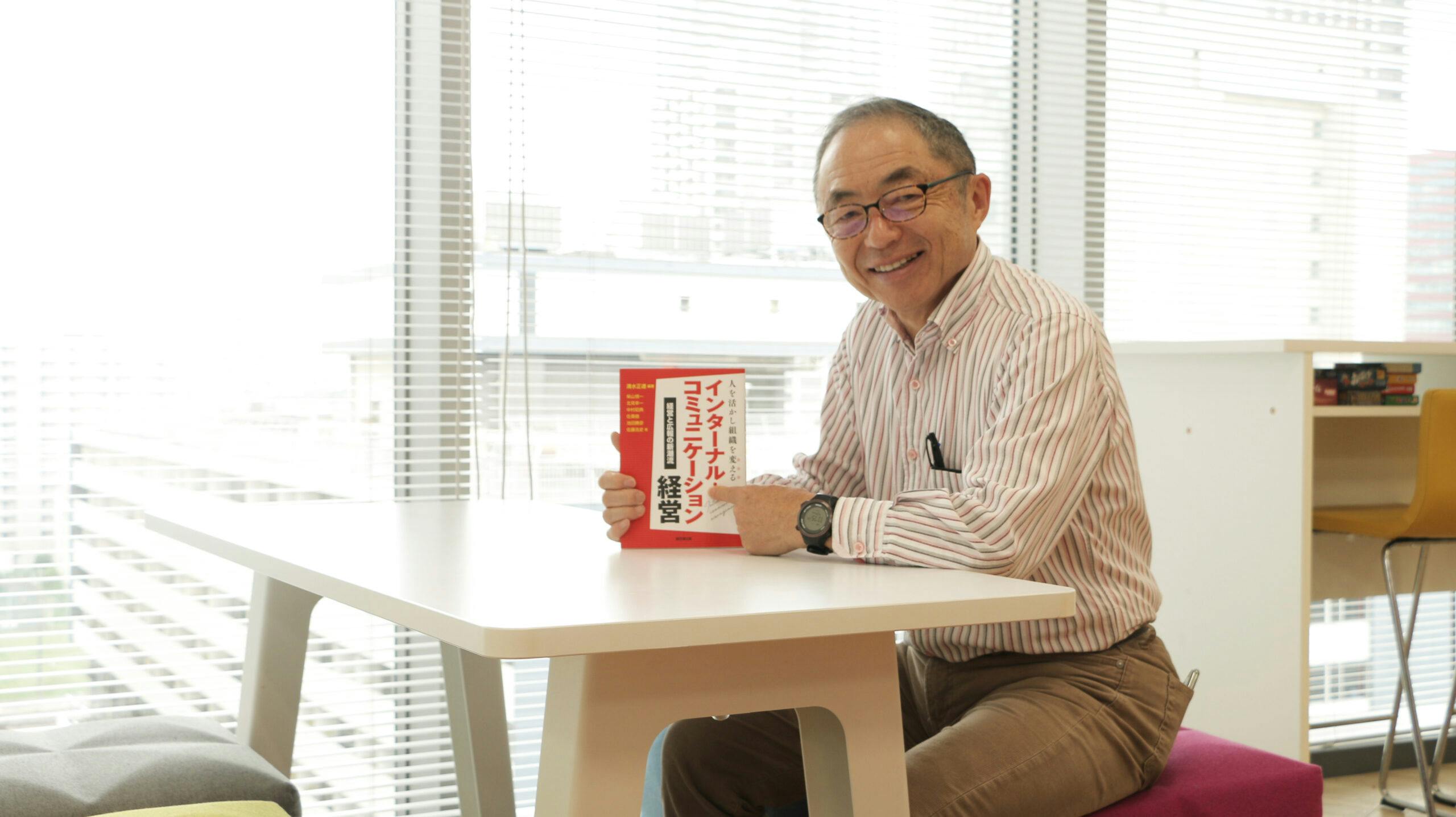
近年、企業のグローバル化やM&A、働き方改革などの観点から、インターナル・コミュニケーション(※1)が注目されている。海外や地方、在宅の従業員に自社の経営理念や目標をいかに理解・浸透させるか、多くの企業が課題に直面しているのではないだろうか。今回は、2019年2月に『インターナル・コミュニケーション・マネジメント』を編集・執筆されたゲストの清水成道・筑波学院大学客員教授に、なぜ今インターナル・コミュニケーションが注目されているのか、その重要性を2回に分けてお聞きします。
近年、企業のグローバル化やM&A、働き方改革等の観点から、社内のコミュニケーション=インターナルコミュニケーション(※1インナーコミュニケーション)が注目されています。 海外拠点や地方拠点、在宅の社員に対して、いかに経営理念や経営目標を理解・浸透させるかが課題になっている企業も多いのではないでしょうか?
今回は2019年2月に『インターナル・コミュニケーション経営』を編著された筑波学院大学 清水 正道 客員教授をゲストに2回にわたり、インターナルコミュニケーションがなぜ今注目されているのか、インターナルコミュニケーションの重要性についてインタビューします。
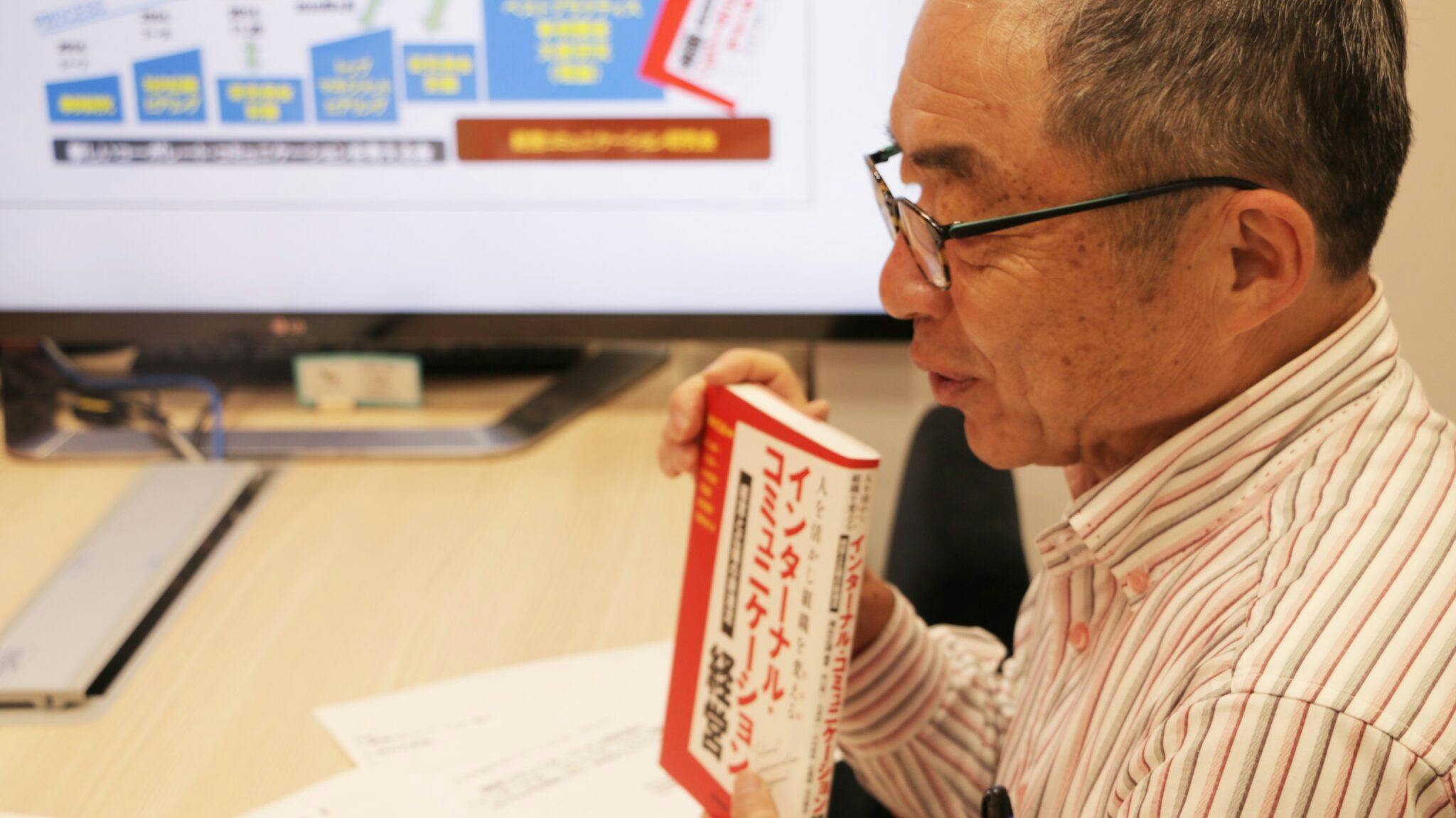
Brightcove (BC) OhnoBrightcove (BC) Ohno Thank you for taking the time to come to our office today. We have also been receiving an increasing number of inquiries about using video for the purpose of internal communication, and I read your book “Internal Communication Management” with great interest. Before we talk about the content, could you briefly tell us about your career and the motivation behind publishing this book? Professor Shimizu I had originally hoped to work for a newspaper company, but my wish was not granted, and in 1973 I joined Fukoku Mutual Life Insurance Company as a new graduate. At first I worked in the Personnel Department, but after a year and a half I was transferred to the Public Relations Department. There I was in charge of internal public relations. BC Ohno You’ve been in charge of internal public relations since 1974! I’m surprised. Professor Shimizu It was just by chance, but soon after joining the company I proposed to the head of the personnel department that we produce a recruitment guide book for students. I was put in charge of the project, and I think the fact that the guide book I put together with the editorial team of new employees was well received within the company led to my being selected for the internal communications department.Professor Shimizu I had originally hoped to work for a newspaper company, but my wish was not granted, and in 1973 I joined Fukoku Mutual Life Insurance Company as a new graduate. At first I worked in the Personnel Department, but after a year and a half I was transferred to the Public Relations Department. There I was in charge of internal public relations. BC Ohno You’ve been in charge of internal public relations since 1974! I’m surprised. Professor Shimizu It was just by chance, but soon after joining the company I proposed to the head of the personnel department that we produce a recruitment guide book for students. I was put in charge of the project, and I think the fact that the guide book I put together with the editorial team of new employees was well received within the company led to my being selected for the internal communications department.
異動後は社内報を作成することになったのですが、ターゲットは当時約1万人いた生保レディーの方々です。ただ蓋を開けてみると社内報があまり読まれていない。営業所にいくとゴミ箱に突っ込んである(笑)。社内報の抜本的な改革が必要だと感じ、女性向けの週刊誌を毎週読んで社内報の記事を見直しました。注力したのは、生保レディーの生活と仕事をルポタージュ風にまとめた記事でした。それが非常に好評で、当時の社長にも注目されたんです。これがインターナルコミュニケーションに関わるようになったきっかけです。1977年に日本能率協会に転職し、ビジネス誌編集記者として勤務し、1989年に広報室長、続いて部長になり広報には都合13年関わりました。
After that, I worked as an environmental management consultant and then taught courses on environmental management and public relations at a university. BC Ohno In 1993, you published a book called “Corporate Culture and Public Relations” with Nikkei Publishing, but could you tell us how that came about? Professor Shimizu When I was working at the Japan Management Association, I took part in writing a series of five books on public relations to commemorate the 15th anniversary of the establishment of the Japan Institute for Social and Economic Affairs. At the time, there were new trends in internal communications, and we interviewed 80 companies and published the book under the title “Corporate Culture and Public Relations”. BC Ohno Of course, the term “internal communication” didn’t exist at that time, did it? Professor Shimizu At the time, it was called “internal public relations”, but because the content was a little narrow, we used the term “corporate culture” to include management principles and visions, and wrote a book about successful cases of internal public relations. After that, we published a book on administrative reform in the US called “Administrative Reform”, which was highly acclaimed by everyone.BC Ohno In 1993, you published a book called “Corporate Culture and Public Relations” with Nikkei Publishing, but could you tell us how that came about? Professor Shimizu When I was working at the Japan Management Association, I took part in writing a series of five books on public relations to commemorate the 15th anniversary of the establishment of the Japan Institute for Social and Economic Affairs. At the time, there were new trends in internal communications, and we interviewed 80 companies and published the book under the title “Corporate Culture and Public Relations”. BC Ohno Of course, the term “internal communication” didn’t exist at that time, did it? Professor Shimizu At the time, it was called “internal public relations”, but because the content was a little narrow, we used the term “corporate culture” to include management principles and visions, and wrote a book about successful cases of internal public relations. After that, we published a book on administrative reform in the US called “Administrative Reform”, which was highly acclaimed by everyone.
In 2002, we also published a book called “Corporate Communication Strategy”, and since then we have continued to publish a book every year, including co-authored works. The idea of implementing external communication based on internal communication. BC Ohno** Actually, within our company, we use the term “corporate communication” rather than “internal communication”. This is because it is now necessary to share awareness and goals not only with employees, but also with partners, franchisees and suppliers. Professor Shimizu That’s right. In “Corporate Communication Strategy”, we positioned all communication carried out by a company as corporate communication. In “Internal Communication Management”, we focused on inside-out-style public relations. This is a way of thinking that aims to improve external reputation based on the results of initiatives within the company. In the book, we feature Itochu Corporation as one example of a successful case.Professor Shimizu That’s right. In “Corporate Communication Strategy”, we positioned all communication carried out by a company as corporate communication. In “Internal Communication Management”, we focused on inside-out-style public relations. This is a way of thinking that aims to improve external reputation based on the results of initiatives within the company. In the book, we feature Itochu Corporation as one example of a successful case.
同社の岡藤社長(現 代表取締役会長)が商社という一般的には分かりにくいビジネスのステータスを上げることを目標に、2013年から働き方改革の先陣を切りました。具体的には朝方勤務制度や健康経営、脱スーツデイ等の施策の導入により、従業員の生活や仕事がどう変わったのか、そのリアルな動画をテレビCMで流したのです。
また、商社の仕事をイントラネットの「トップの動静」欄を通じて従業員に伝えています。日本の「総理の動静」も新聞や「官邸ホームページ」で公開されていますよね。同社でも岡藤社長が誰に会ったのか、どのような発言があったのか一挙手一投足を社内に公開しています。これらの施策により商社という分かりにくい仕事イメージを、従業員の働く姿・生活で表現している。しかも動画だから感情の動きも表現される。これを私は、インサイドアウト型経営と言っています。
The reason for publishing “Internal Communication Management” BC Ohno I see, so you are using the initiatives you have taken within the company externally as well. This is a good example of how corporate communication leads to corporate branding. I think there are some similarities with the Toyota Times, which is currently making headlines. So, could you tell us why you decided to publish “Internal Communication Management” again? Professor Shimizu I had always been interested in internal communication, but the direct trigger was when I heard a manager say at a reception at a general meeting in 2013, when I was appointed as the chair of the Japan Public Relations Society, that they were putting a lot of effort into internal communication.BC Ohno I see, so you are using the initiatives you have taken within the company externally as well. This is a good example of how corporate communication leads to corporate branding. I think there are some similarities with the Toyota Times, which is currently making headlines. So, could you tell us why you decided to publish “Internal Communication Management” again? Professor Shimizu I had always been interested in internal communication, but the direct trigger was when I heard a manager say at a reception at a general meeting in 2013, when I was appointed as the chair of the Japan Public Relations Society, that they were putting a lot of effort into internal communication.
その当時、日本企業は海外・国内企業のM&Aや事業再編成を積極的に実施していました。しかし、合併して数年経っても社内システムが統一されておらず、両社の打合せ会議などでなかなか意見が纏まらないという悩みを多く聞きました。情報システムや人事制度の統合、見直しのみならず、社内広報施策についても課題があるのでは?と思い立ち、研究会を組織して日本広報学会の会員企業23社に現状や課題についてヒアリングを実施しました。結果は、グローバル化に伴う言語やセキュリティの問題、社内Web、SNS利用など各社によって回答は様々でした。
The issues faced by each company were diverse, and the discussions within the research group also went in many different directions, but in the end we decided to narrow down the theme to “management philosophy” and carry out research activities. When it comes to internal company PR, the PR department is usually in charge, but in order to get the management philosophy across to employees and encourage them to take action, the PR department alone cannot do it. It is necessary to conduct interviews with the management planning department, the human resources department, and the management team. So, with the cooperation of seven major companies, we conducted interviews to find out how corporate philosophy is communicated and shared with employees. ****The president himself devotes more time than other executives to interacting with employees BC Ohno As a result of the interviews, were there any patterns of success in companies where corporate philosophy is well-established? Professor Shimizu Yes. Companies where the top management actively engages in dialogue with employees tended to have a strong sense of corporate philosophy among their employees.BC Ohno As a result of the interviews, were there any patterns of success in companies where corporate philosophy is well-established? Professor Shimizu Yes. Companies where the top management actively engages in dialogue with employees tended to have a strong sense of corporate philosophy among their employees.
社長自身が他の役員以上に時間を割いて、従業員に接しようとしている
BC 大野: ヒアリングの結果、企業理念が浸透している会社の成功パターンはあったのでしょうか?
清水教授: はい。企業のトップが従業員との対話を積極的に実施している会社は、従業員に企業理念が浸透している傾向がありました。トップ自身が他の役員以上に時間を割いて、従業員と語り合う場をつくろうとしているのです。また、経営理念を「自分ごと化」させるには、従業員の自主的な行動の場を用意したり、発表の機会などを設定し、優れた取り組みに対して報奨を行うことが非常に効果的であることが分かりました。経営理念を共有するだけではなく、従業員が皆同じ理念に向かって行動していくことが必要です。
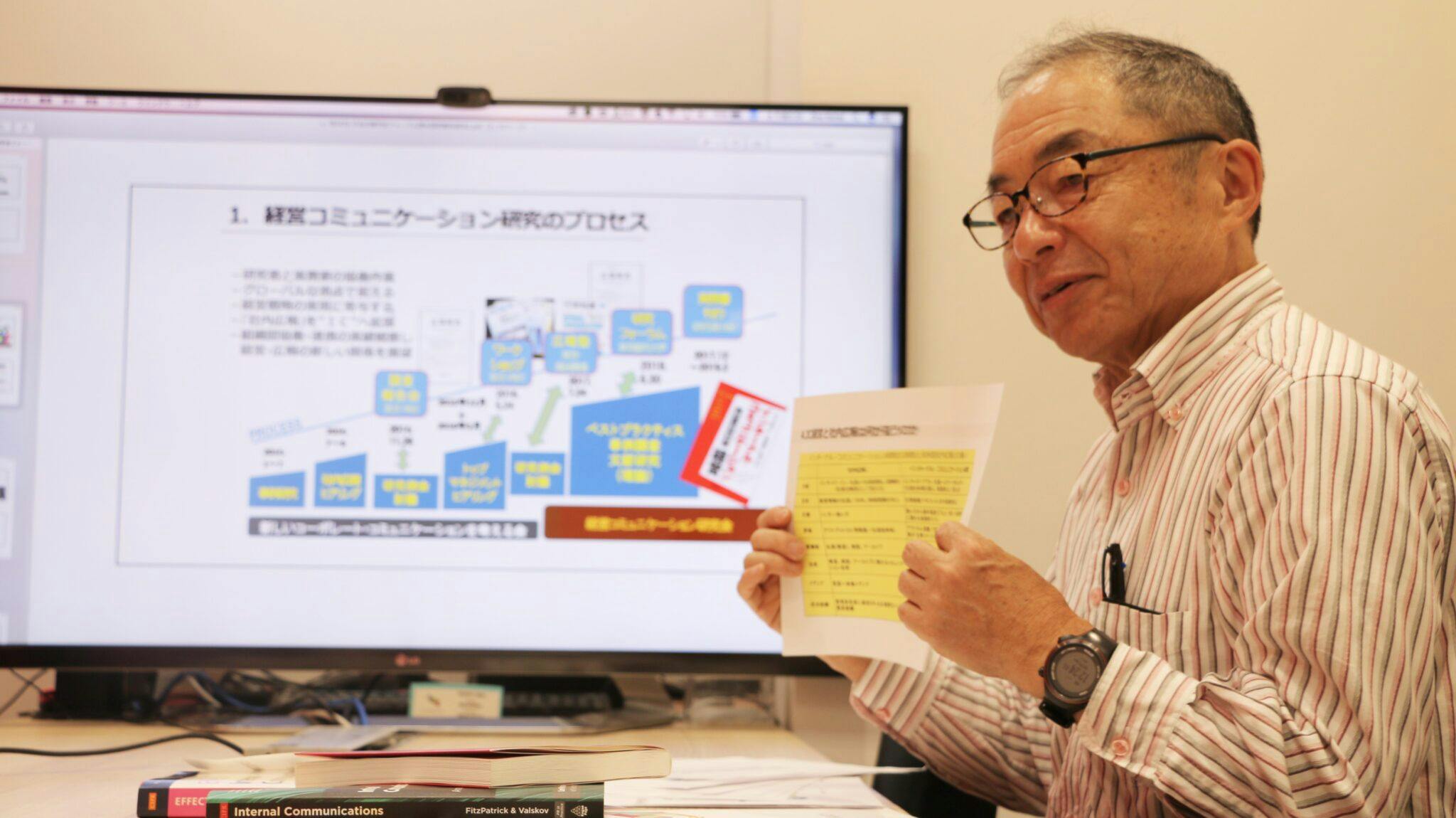
BC OhnoBC Ohno I see. It’s no use just sharing the corporate philosophy with employees if they don’t put it into practice. Is this the difference between internal PR and internal communication? Professor Shimizu That’s right. It is important to create a new corporate culture. To do this, it is necessary to get the cooperation of not only the public relations department, but also the human resources and training departments. It is also important for the management planning and CSR departments to encourage employees to act in line with the strategy.Professor Shimizu That’s right. It is important to create a new corporate culture. To do this, it is necessary to get the cooperation of not only the public relations department, but also the human resources and training departments. It is also important for the management planning and CSR departments to encourage employees to act in line with the strategy.
企業のトップが企業理念を従業員に浸透させる意義を理解し、広報部門や人事研修部門などの関係部門が一丸となって従業員の行動を支え、各部門長の応援もする必要があります。
インタビュー前編は以上になります。1974年から社内広報に携わり、インターナルコミュニケーションに進化していく過程を調査、分析されている清水教授のお話は非常に重みがあるものでした。次回はインターナルコミュニケーションの核となる、経営理念の理解⇒自分ごと化⇒実践についてお話頂きます。
※1 インナーコミュニケーションは和製英語であることから、本投稿ではインターナルコミュニケーションを採用しております。